Showing posts with label jewish. Show all posts

Thursday, August 8, 2013

Routes to Roots, improved

I'm going to start with a digression. I'm not sure if you can digress before you have a main topic, but here we go.

In the past, when one did research into their Jewish relatives from Eastern Europe, the assumption was sometimes that there were no records that survived the Holocaust. This is not just a baseless assumption – I've personally been told many times by archivists in Eastern European countries that "All Jewish records were destroyed in the war." When receiving such responses I sometimes wonder which of the following possibilities is the actual case:
  • The Jewish records were, actually, destroyed (it did happen sometimes).
  • The archivist knows exactly what records exists, but doesn't care to tell you about them.
  • The archivist doesn't differentiate between Jews and non-Jews, and even though records were kept separately in the past, does not index them separately and thus is just saying there are no separate Jewish records (or a previous archivist did this, probably during the communist period, and this archivist doesn't know the difference).
  • The archivist is ignorant of what Jewish records exist.
Really only the first two possibilities are likely. It's not likely that different collections would or even could be mixed together (certainly an archivist would realize the documents come from different collections), and it's not likely an archivist would not know of the contents of their archive. Obviously sometimes it's true, the records were destroyed, and the archivist is telling you what happened. Sometimes, however, archivists seem disinclined to lift a finger to help you, for whatever reason it might be (laziness? antisemitism?) which you can decide on your own.

So how do you know what records exist for the town you're researching? For records in (or in what once was) Poland, you can try searching JRI-Poland to see if they have indexed records for your town. There is actually a list of towns on the JRI-Poland web site, and if you follow the link to the town page you can find out many of the records that have been indexed for that town. Some records may not be listed, however, so it's always a good idea to contact the town administrator and ask if there are other records as well (which might cost money).

One of the most important sites for Jewish genealogists is The Miriam Weiner Routes to Roots Foundation (RTR) site. Miriam Weiner has worked to inventory the Jewish holdings of archives across Poland, Ukraine, Belarus, Lithuania and Moldova (and some in Romania). This information was originally published in two books covering Poland, and Ukraine and Moldova, which are now largely out of date, but the information is updated and expanded on the web site. Whenever new Jewish records from specific towns are located, they are added to this database.

In other words, if you want to see if birth records exist from your ancestral town, you search for the town, and can see what records are known to exist for that town. The records that exist may be in the local archive, might be in an archive in a country that used to be the same country as where your town is (such as the L'viv, Ukraine archives for records of towns in Poland), or could be in archives like CAHJP in Jerusalem.

For example, see the records available for Kanczuga, Poland (9 records groups), Odessa, Ukraine (16 records groups), and Krakow, Poland (30 record groups - including one from CAHJP).

I'm happy to see that the site has been improved, and it is now easier to get to the search interface.

In addition to the archival catalog, RTR has recently started added it's own name databases.
1929 Pulawy Taxpayer List
When name databases exist for a town, there will be a link at the top of the town archival holdings page. The following name databases were added as the first batch last month:
I've linked directly to the database search pages for each database.

This is an interesting development for RTR, and it will be interesting to see how these new databases develop. Hopefully they will add a single search interface for all the name databases in the future.

It's always exciting to see new databases made available for Jewish genealogy. The previously mentioned JewishGen Memorial Plaques Database and four new databases in IGRA's All Israel Database, as well as eight new databases added to Gesher Galicia's All Galicia Database (I hope to post about this in the future), and these new databases from RTR all contribute greatly to Jewish genealogy. Certainly an exciting time to be involved in Jewish genealogy.

Saturday, August 3, 2013

Four New Israel Databases

It's common for new Jewish genealogy databases to be released shortly before the annual International Conference on Jewish Genealogy, which this year is taking place in my hometown of Boston. I already mentioned the 30,000 records in the new JewishGen Memorial Plaque Database.

To add to those records, the Israel Genealogy Research Association (IGRA) has released four new databases, totaling nearly 16,000 new records. The new databases include:
  • Graduates of Gymnasia Herzilia 1918-48
  • List of Names in the Register of Adult Jews in Petah Tikva 1936
  • Marriage certificates Jezreel Valley 1931-41
  • Voter List Tel Aviv 1922
From the IGRA presentation:


That brings the total number of records added to IGRA databases since its launch last year to 168,112 records in 140 different databases. To see all of IGRA's databases, go to their All Israel Database. You need to be logged into their site to search the databases, but signing up is free. Congratulations to the whole IGRA volunteer team that put these databases together.

Monday, July 29, 2013

New Memorial Plaque Database

In the the run up to next week's IAJGS International Conference on Jewish Genealogy in Boston, expect various groups to be releasing new databases to help Jewish genealogists. One new database that was just released is JewishGen's Memorial Plaque Database. Organized by Nolan Altman, the database is an attempt to gather all the information on memorial plaques found in synagogues and other Jewish institutions. Many synagogues plague a plaque on their wall for each member who dies, to record their yahrzeit date (the day a family member says kaddish for them). These plaques contain very important information for Jewish genealogists, including the person's name (in the US usually in English and Hebrew), and in most cases the name of the father of the deceased (at least in Hebrew).

When synagogues close, these plaques with their unique information are frequently thrown out, although sometimes are put up in other synagogues or institutes. Collecting the information from these plaques now is a great effort, and something whose time has come. There has been discussion for years about collecting this information from various people involved in Jewish genealogy, so kudos to JewishGen for taking up the gauntlet and getting the project started.

Section of a memorial wall from Lowell, MA
For the launch of the database, there are nearly 30,000 names listed. These come from the US, Israel and Canada. About half of the names collected so far come from the Boston area, whose local Jewish genealogy group made an effort to collect the names in the run up to the conference, and collected 16,000 names from 30 different institutions.

If you're interested in photographing and indexing the memorial plaques in your local synagogue, you can do so and contribute the data to this effort. Synagogues who want to contribute this information to the database can add information about their synagogue to the memorial plaque web site, in order to get traffic from those people searching for family members.

My only concern with the database right now is that the images they provide are not big enough to read the information directly from the photographs. Many times relatives are grouped together in these memorial walls, and it would be useful to see the images in higher resolution so one could read all the plaques and see who is located nearby on the wall. Hopefully this can be remedied in the future.

For more information, go to the web site, or contact the project coordinator, Nolan Altman.

Monday, April 15, 2013

Jewish names, red herrings, and name changes

The study of one's family history includes a large amount of dealing with names. Surnames. Given names. Maiden names. Married names. Nicknames. Name changes. While many of the articles I've written in the 2+ years of this blog have dealt with names in some fashion, here's a look at the articles that focused specifically on them:

January 9, 2011

A look at the introduction of surnames in the Jewish community two centuries ago in the Austro-Hungarian Empire, and the government bureaucracy which forced many Jews to take the names of their mothers instead of their fathers, forever confusing their descendants researching their family history. A look at a specific case in my own family where birth certificates show the truth of what happened.

May 10, 2011

A look at names changes in NYC and the reasons behind them, as well as the myth and history of name changes at Ellis Island (or in my family's case, Castle Garden). A look at a very interesting book documenting names changes in New York, and a interesting story of a family that lived and had children under the wrong name for years, before changing it later.

May 17, 2011

This article is a brief look at two common historic Jewish naming patterns, and how they intersect. The first naming pattern is the use of animal names from Hebrew and/or Yiddish. The second pattern is giving two related names to a child.

This article also looks at the historical role of the shem kodesh (Jewish religious name) and the kinui (secular name) among Jews.

June 17, 2011

A look at how given names of the same person can change over time, particularly if they moved between countries. This article has a great table of Jewish given names that shows the names in English, Hebrew, Transliterated Hebrew (i.e. Hebrew in Latin letters), Tranliterated Yiddish, and Polish.

This article also lists and reviews a number of important books on Jewish given names, and provides information on the Given Names Data Bases (GNDBs) at JewishGen.

March 21, 2013

Plane crashes, bigamy and global law firms – this article has it all! Seriously though, this article takes a look at how sometimes you can spend years pursuing a lead that turns out to have been a typo. Examples include a newspaper article that detailed a plane crash in Guatemala, a Rhode Island state census that shows a man with the same name, birth year and birth country as my gg-grandfather who is married to a different woman, and a global law firm that somehow seems to spell their own name wrong on occasion. In all three examples, a family whose name was Traurig was erroneously printed or displayed as the much more rare name Trauring, leading to endless pursuits of families that it turned out were not related at all.

April 15, 2013

Whereas the above article looked at three cases where a family named Traurig was erroneously listed as Trauring, this article looks at four families whose surnames started out as Traurig, but actually changed their names to four different surnames – Trauring (two families), Vesely and Smutny (one family), and Al Yagon (one family).

The article looks at families that started out with the name Traurig, and changed their names in Poland, in Australia, and in Israel.

I hope you like these articles. Let me know what you think. Is there anything else you'd be interested to hear about Jewish name, or names in general, let me know and I'll see about adding a new article to this list in the future.

What does New Zealand have against Justice?
May 2, 2013

A somewhat tongue-in-cheek look at the different rules that some countries have restricting what parents can name their children, with a special look at the most-rejected name in New Zealand: Justice (which happens to have been the 512th most popular male name, and 529th most popular girls name, in the US in 2011).

Popularity of girls names in the US
June 6, 2013 (on lexigenealogy.com)

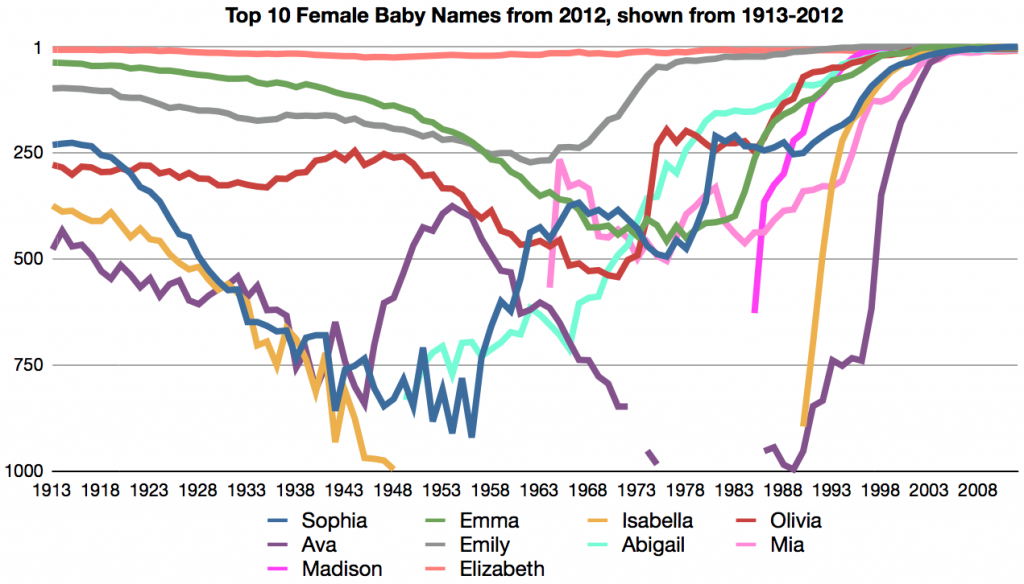
What girls names have been the most popular in the past century? What makes a name popular? What causes an old name to come into fashion again? Where did the name Aaliya come from? Layla? Why did Savannah come back after 50 years off the most popular name list?

Racism and Commonality as Reasons for Name Changes
June 9, 2013

A look at the reasons given for changing names in New York City, as recorded in a book that transcribed name change petitions filed between 1848 and 1899. On two ends of the spectrum, some people changed their names because they were too common, and some changed them because they were too ethnic (specifically too Jewish). A focused look at the most commonly changed names in the book – Smith, Levy and Cohen.


Wednesday, February 6, 2013

International Jewish Genealogy Conference in Boston

Once a year the the IAJGS partners with a local Jewish genealogy society to have the International Jewish Genealogy Conference. Last year it was in Paris. The year before it was in Washington, DC (where I spoke about Utilizing Belgian Archives for Jewish Research). This year, in partnership with the JGS of Greater Boston, it will be in my hometown, Boston.

The conference is taking place at the Boston Park Plaza Hotel, and will be from August 4-9. This is same place that the conference was held the last time the conference was held in Boston back in 1996. The hotel is in an amazing location for those who have never been to Boston. There are tons of things to do and see within walking distance of the hotel, from the historic district in Boston (Freedom Trail), to the first public park in America (Boston Common), to the shopping district (Newbury Street).

There is a special conference rate at the hotel, available for up to two weeks before the conference in case you want to show up early and tour. To get the conference rate, you can book through the conference web site, until July 11.

For those who have never been to the annual conference before, IAJGS has put together a video on what you can expect:


If you've never been to one of the annual conferences, I highly recommend it. You're sure to learn a lot, meet lots of people, and make connections with people and groups that are researching the same places and families you are researching.

Registration is now open, with an early registration discount available through April 30, 2013. One other date worth mentioning is that all additions to the conference Family Finder must be submitted by July 1, 2013. The Family Finder is a directory of family names and ancestral towns that are being researched by attendees at the conference. The top five names and towns can be displayed on your conference badge, and up to eight names will be put into the Family Finder book that is distributed at the conference.

Friday, June 15, 2012

Around the World in 40 Blogs

Family Tree Magazine  recently published  their list of the top 40 international (outside the United States) blogs, titled Around the World in 40 Blogs, and one of them is the Israel Genealogy Research Association (IGRA) site (genealogy.org.il):


As some of you may know, I built most of that site late last year and early this year for IGRA. It's rewarding that something I spent so much time and effort on is being recognized. If you haven't checked it out, or haven't seen it recently, I recommend going to the site and seeing what's there. There are videos and articles and dozens of searchable databases with information you cannot find anywhere else online.

Tuesday, February 28, 2012

Israel Through Photographs

A recent article in the recently-launched Times of Israel website covers, briefly, the story of Nadav Mann, who has been spending many years criss-crossing Israel to scan private collections of photographs from the early years of the State of Israel (and the years leading up to its foundation). This collection is incredibly important and offers a unique view of the growth of communities within pre-state Israel.

The article is written by Matti Friedman and is titled A lost world in black and white. The article includes a selection of the more than 100,000 photographs that Nadav Mann has collected over the years, but also helpfully links to a series of online albums [these now seem to be gone, sorry] that Nadav Mann has published via Google (which include thousands of photos, but certainly not all of them).

While the descriptions of the photos in the Google albums are all in Hebrew, just browsing through them without being able to read the captions is still incredibly powerful. Of course, if you find a photograph with someone you know, you should leave a comment on the photo - as not everyone in each photo is known, and you might be able to help improve the collection by pointing out who someone is in a photo.

An easier look in English at many of the photos can be found in Nadav Mann's regular articles highlighting photos from his collection on Ynet's English site (Ynet is the online publication of Israel's largest newspaper, Yediot Achranot).

A few photos from the collection:
[UPDATE: Sorry, but it seems Nadav Mann has removed the photo albums he had posted online, and the photos in this article were from that album so are also now gone. Check out the article A lost world in black and white and Nadav Mann's other articles in Ynet.]
Maccabi Girls Trip in 1930 in Poland
1936 Class Photo from Herzaliya Gymnasium
Building an irrigation system connect to the Yarmouk River in 1940
Kibbutz Dalia Dance Festival, during holiday of Shavuot in 1944

Sunday, February 12, 2012

Researching people born in Israel, but who moved

I was reading Todd Knowles' The Knowles Collection blog, where he discusses the recently introduced Brazil, Immigration Cards, 1900-1965 collection on the FamilySearch.org web site. He uses as an example the record of Esther Abraham Precher, who immigrated to Brazil in 1957:

1957 Brazil Immigration Card for Esther Abraham Precher
My grandmother's brother spent some time in Brazil during WWII, and although he probably didn't immigrate officially, I figured I would take a look. I didn't find a record (although looking at the collection it looks like only half of the images are indexed so far), but looking at the record Todd Knowles had used as an example, I saw something very interesting. Her record shows she was born in Jerusalem. Why was a woman born in Jerusalem moving to Brazil in 1957?

Of course, I can't be certain as to why she moved, but I can make an educated guess. If you look closer at the immigration card, you can see that she was born in 1898 in Jerusalem, but that her passport had recently been issued in Cairo. It would seem that while she was born in Jerusalem during the Ottoman period, she at some point (perhaps when she got married) moved to Egypt. Her immigration occurred just a few months after the 1956 Sinai War, where Egypt fought a war against Israel (along with Great Britain and France). While being Jewish in most Arab countries was difficult after Israel was founded, it was probably particularly dangerous to be in Egypt after they had just fought another war with Israel. Over half the Jewish population of Egypt were forced out of the country in this period, and were forced to leave all their asset behind. Even if she had wanted to go back to Israel where she was born, it probably was not possible given the political situation, so she probably went wherever she could get a visa for, which in this case was Brazil. Interestingly enough coming after my last article on Food as Genealogy – Iraqi Kubbe, this was much the same motivation for the many Iraqi Jews and Jews from all Arab countries that were forced to flee their homes for Israel, the United States or elsewhere. This was not a good time to be Jewish in any Arab country (and unfortunately the situation has not improved since – Egypt and Iraq both had flourishing Jewish communities dating back to the 2nd Temple period, and both have less than 100 Jews each today).

If you search for records in the Brazil collection, you would find there are actually 243 records that list a birthplace for the person as Israel. You could widen your search to all mentions of Israel in all databases on FamilySearch, and you'd find that there are 8728 records (as I write this article) which list Israel as a location in the record. Of course, if you were trying to find someone in a record that was created before the State of Israel came into being, it would not list Israel. You could therefore search for Palestine which was used as a place name by some (although people would also say Ottoman Empire, Ottoman Turkey or Turkish Empire), where you would find 13,892 records (as I write this). You could also search for specific cities, such as Jerusalem (5650 records), Tel Aviv (434 records) or Haifa (337 records). Some of the Jerusalem results will probably be records from other towns called Jerusalem (did you know there was a Jerusalem, Ohio?). Jaffa, for example, came back with over a million records, which doesn't make much sense. If you search for Jaffa, Palestine, however, you get 9489 results which at first glance seem mostly Jewish.

Anyways, the Brazil Immigration Cards database is a very interesting collection for those with connection to Brazil, but for anyone who knows they had family in Israel at some point in the past but may have moved elsewhere, this is an interesting way to search for records that may help you in your research.

Tuesday, February 7, 2012

Food as Genealogy – Iraqi Kubbe

Kubbe Selek (Beet)Kubbe Dlaat (Pumpkin)

When one thinks of family, invariable thoughts run to family meals – celebrations with family over holidays or other special events. Many times one serves certain family recipes at these meals, and sometimes a specific recipe is associated with a specific holiday every year. However, it seems to me that recipes also have a way of getting lost over the years. How many of us make the exact same recipes that our families made in previous generations? Sure, many of us make 'ethnic' recipes from the countries our families came from, but how many are actual family recipes and how many came from cookbooks or web sites? In many cases those original recipes were lost not because they were forgotten, but because modern conveniences like microwaves and food processors, as well as a desire to fit in to their new communities, changed the way our families cooked, and simpler recipes replaced more complex 'authentic' recipes they had made when they first arrived on new shores. Convenience played another role in changing recipes, as sometimes the ingredients available one place were not available in one's new home, and ingredients were substituted, forever changing the recipes.

With all of this in mind, it was interesting when my mother-in-law came to visit us in Israel recently and decided to teach my wife how to make Kubbe. My mother-in-law was born in Iraq, and moved to Israel as a child due to the increasing violence and discrimination against Jews in Iraq in the early 1950s. As a teenager she went to college in the United States, where my wife grew up. When my wife was growing up, her grandmother used to come and visit and make authentic foods she learned to make in Iraq. One of the spotlights of her culinary repertoire was Kubbe. When her grandmother passed away, the Kubbe stopped as her mother never made it when my wife was growing up.

Kubbe comes in many forms, and varies from country to country in the Middle East. The spelling also varies greatly in English – Kubbe, Kube, Kubba, Kibbe, etc.

When I was growing up, the only Kubbe I was aware of was the football-shaped fried Syrian variety. Iraq also has a fried variety, but it's generally larger and rounder. Iraq is also home to a boiled form, that is cooked in a soup and served over a bed of rice. The boiled form is sold across Israel as a soup in a number of different flavorings - Kubbe Selek (Beet) is a very popular one due to its sweetness and bright color, and other flavoring such as lemon and tomato exist in restaurants across Israel, brought here by the large population of Jews from across the Middle East. My wife's family from Iraq made three specific flavors of this Kubbe – Beet, Pumpkin and Okra. When my wife was pregnant with our first child, her mother let us in on a little secret – she knew how to make Kubbe, and she knew how to do it really well. She hadn't wanted to get into the stereotype of the Sephardi wife making all of these specialty foods when she was a young wife, but now she decided to make us a batch of Kubbe. My wife was in shock. That was nearly five years ago, and over the years she made it a few more times, but on this trip she decided to teach my wife the ins and outs of making Kubbe. On this trip, she made Kubbe with Beets, Kubbe with Pumpkin, and fried Kubbe, and showed my wife how to do all of them.

The genealogist in me saw this is as passing down an oral tradition, and decided to document it. Researching Jewish genealogy in Iraq may be close to impossible, but at least there is this family hisotry in the form of food that was passed down and we can continue to share. My nerdiness is your gain, as the remainder of this article is a photo-rich step-by-step guide in making Iraqi Kubbe, with either Beets or Pumpkin. If you like Okra, sorry, we don't, so we never asked how to make that one...

More or less, there are no secret ingredients used to make this dish. There are a few specialty ingredients, but these are easy to find these days. In Israel any gourmet food store or spice store will carry what you need, and in the US you can order most of this online (except maybe the Noomi Basra - more on that later). However, even without these few special ingredients, you can make this recipe and it will be pretty good, if not as tart. If you don't like tart foods, then you might want to skip some of these ingredients anyways. In general it's good to think of this as a sweet and sour dish, and if you don't have one of the sweet or sour ingredients, just substitute them with something you do have.

There are three main components to making this Kubbe – the dough, the meat and the soup. The best part about this recipe is that the two versions you see photos of at the top only differ in one ingredient – you either add pumpkin or you add beets when you get to that stage. The rest of the recipe is exactly the same.

With a little practice, from beginning to having the soup cooking should take between an hour and and hour and a half. Once it's cooking you need to stir occasionally, but basically you leave it alone for at least half an hour. So, making this can range from an hour and a half to two hours or thereabouts.

Dough

Let's start with the dough. It's a good place to start because it's easy and it needs to sit for 20-30 minutes after you first knead it, so you might as well get it over with first. The recipe is just three ingredients:

Dough
3 CupsFarina/Cream of Wheat/Solet
2 tspSalt
1 1/2 CupWater

The main ingredient is Cream of Wheat (in the US). In the UK it's known as Farina. In Israel it's Solet. Basically a coarsely ground wheat product.

Originally in Iraq they used to grind rice for this purpose instead of using Farina. This is a change made after leaving Iraq, but is fairly universal. If I had to guess, this switch was due to the shortage of rice in Israel during the same period when most Jewish immigrants from Arab countries arrived.

This problem also led to the creation of Ptitim, known outside of Israel as Israeli Couscous, as a substitute for rice. The origin of Ptitim is quite amazing – David Ben Gurion, the first Prime Minister of Israel, asked Osem, a major food company in Israel, to develop a wheat-based replacement for rice, since rice was a major staple of the diet of Jews from the surrounding countries. Anyways...

You mix the ingredients together in a bowl and knead until it's slightly elastic.

Knead until slightly elasticDough after waiting 20-30 minutes

After kneading the dough, you need to let it sit for 20-30 minutes, so set it aside and start on the next step.

The Meat

The meat is pretty simple. Basically it's chopped meat, onions, parsley, with rice and some spices.

Chopping ParsleyFinished Meat Mixture

Here's the ingredient list:

Meat Mixture
1 lbGround Beef
1/2 CupRinsed, Uncooked Rice (Basmati is good)
1 CupParsely, Finely Chopped
2Onions (Medium), Finely Chopped
2 tspBaharat Spice Mixture (see notes below)
2 tspSalt
1 tspCinnamon
1 tspBlack Pepper, ground

Chop the onions and parsley very fine. Rinse the rice, then drain the water. Add the everything together in a bowl and mix together. You can do this step in advance if you want, and store for up to a day. However, it takes so little time you can do it in between the dough and the soup without much problem.

What, you might be asking, is Baharat? Baharat is one of the three specialty ingredients in this recipe, and it's used in both the meat mixture and in the soup. In Arabic, Baharat simply means spices. Baharat is a common spice mixture that is used across the middle east, but it varies by region. Thus Baharat in Iraq is not the same as that in Lebanon, which is not the same as that in Turkey. Indeed, the exact mixtures probably vary by family.

In Israel almost any spice store (and there are many of them) will carry Baharat – just ask for it. In the US, speciality food stores will carry some form of it, or you can look on Amazon, which has several varieties of it, even kosher-certified organic mixtures. If you don't want to, or can't, buy Baharat where you live, you can make you own with the following recipe:

Baharat (All ground)
2 TbspBlack Pepper
2 TbspCumin
2 TbspPaprika
1 TbspCloves
1 TbspCoriander
1 tspCinnamon
1 tspNutmeg
1/2 tspCarnomon
 
Starting the Soup

We're just going to put a few ingredients in a stock pot to get started, as they also need time. Here's what you need:

Soup Starter
2Onions, coarsely chopped
2 TbspOlive Oil
2 CupsBeets or Pumpkin

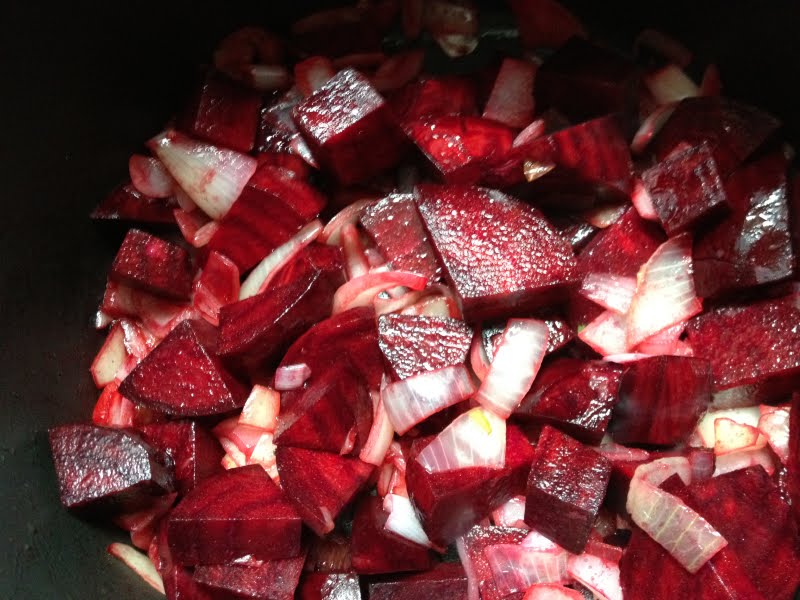
Start out by adding the olive oil and onions to the stock pot and brown the onions. Peel and cut the Pumpkin or Beets into bite-size cubes. When the onions are browned, add the Pumpkin or Beets and let that cook too. You can leave it cooking for 10-15 minutes until you're ready to add the flavoring and water.

Adding Beets to the potOnions and Beets cooking

While the onions and the Pumpkin or Beets are cooking, move on to the next step...

The Soup Flavor

As mentioned earlier, the basis of both the Pumpkin and Beet soups is identical. Here's how to flavor the soup that you'll be boiling the Kubbe in.

Soup Flavoring
3Lemons (Juice of)
1/2 CupTamarind Concentrate
1/2 CupBrown Sugar
1/2 CupOlive Oil
2 tspBaharat Spice Mixture (see notes above)
1 tspCinnamon
2 tspSalt
1Noomi Basra (Black Lemon) - see notes below
14 CupsWater, approximate

Mix the ingredients of the soup flavoring together in a bowl with 2 Cups of Water, and whisk together. Make sure the Tamarind concentrate gets fully mixed together with the other ingredients.

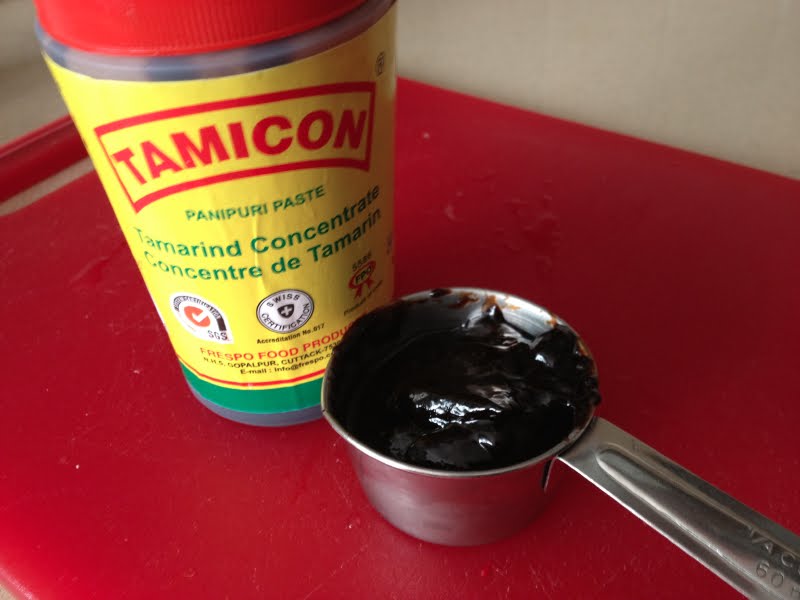
Tamarind is the second specialty ingredient used in this recipe. It adds a lot of tart tangy flavor to the final dish, and is highly recommended. You'll probably find other uses for Tamarind once you start using it. Like Baharat, this is fairly easy to find in Israel, and in the US you can find it in specialty stores and yes, even on Amazon. For those worried about it being kosher, the one here comes with kosher certification and the same brand is sold on Amazon, but I don't know if it kosher certified or not.

Juicing LemonsTamarind Concentrate

Taste the mixture for future reference – if you find the flavor of the final product is not tart enough, or not salty enough, etc. then this is a good point to check and to adjust it in the future.

Add this to the stock pot with the additional 12 cups of water. Basically you want to add enough water to have room for all the Kubbe you're going to add soon. Make sure you don't add too much water, however, or the pot can overflow when you add the Kubbe.

If you can find a Noomi Basra (literally a Basra Lemon, but it's actually a dried Lime) add this as well – it will add more tart citrus flavor. In English it's called a Black Lime. You can pierce the Noomi Basra a couple of times before adding it, or crush it and add the pieces to the soup. This is the third and last specialty ingredient in the recipe, and the hardest to find. In much of the Arab world, this is called Loomi. In Iraq, they are called Noomi Basra (Basra Lemon), after the town of Basra in Iraq. As I found out about them from my mother-in-law, I refer to them by their Iraqi name. In Israel, they're called Persian Lemons. In Persia (Iran), it's called Omani, after the country of Oman. Basically, it's a lime that is boiled in salt water, then dried out in the sun. It gives a very unique tart citrus flavor to the dish, more complex than the lemon or the tamarind concentrate by themselves.

Noomi Basra in the MarketA Noomi Basra Cracked Open

Bring to a rapid boil. The soup needs to be boiling strongly when you add the Kubbe.

Making the Kubbe (a trick that makes it easy)

For many people, Kubbe seems daunting because the idea of forming all the Kubbe balls and having them come out right seems impossible. Indeed, I don't think my wife ever expected to make Kubbe because of this fact. However, while she was learning to make Kubbe from her mother, she ran into an unexpected stroke of luck. Her cousin came to visit and her cousin, who has made Kubbe before, learned a trick for making a type of cookie that she applied to making Kubbe, making it much simpler, and the result much better. Basically, you oil a cutting board and your hands, and you take a piece of dough and make a circle about 3 inches across. Since the board and your hands are oiled, the dough doesn't stick to the board. Add the meat, pull the dough up around the meat, and roll it in your oiled hands. Perfect thin-walled Kubbe, better than many old Iraqi women who have been making Kubbe for decades can make.

Oil your workspace......and your hands

To make the Kubbe balls, you want to start by taking the dough that you made earlier. Knead it a little and test it out by taking a piece off and seeing if it is easy to work with. If you find it too liquidy or otherwise falling apart, you can add some plain flour to the dough to get the consistency better. If you do that, make sure to knead it all together and wait a few more minutes. If you want, you can separate the dough into pieces in advance, or you can just take pieces from the dough as you go.

Separating the doughSpreading the dough and adding meat

As mentioned before, you now take a piece of dough, and spread it out into a circle. Add some meat. Pull the dough up around the meat and push it together. Once it's sticking, roll it in your hands to make it round. If there's hole in the dough, you can patch it with more dough.

Two more recommendations. Add additional oil the board and your hands as necessary during the process. Also, keep a bowl with some water it in nearby so you can rinse off pieces of meat or other debris from you hands as you go, otherwise you might end up with pieces of meat on the outside of the Kubbe balls. It's not a big deal, but if you're a perfectionist, having the water nearby is handy.

Pulling up the doughFinished Kubbe balls

Repeat the process until all the Kubbe balls are done. In our case this recipe made 34 Kubbe balls.

Put It All Together

Make sure the soup is up to a rapid boil. Add the Kubbe balls one at a time into the boiling soup. Make sure the soup is boiling when you add each ball, as adding the Kubbe balls will bring down the temperature each time. So add them quickly, but wait before adding each one if the soup is not boiling yet.

Adding a Kubbe to the soup (Pumpkin)Kubbe balls rise during cooking (Beet)

Stir the pot occasionally, and cook for about half an hour. Taste one kubbe ball to make sure it's cooked properly.

Serve over a bed of rice, or in a bowl as soup.

I'll repeat those pictures of the finished product from above:

Kubbe Selek (Beet)Kubbe Dlaat (Pumpkin)

So special thanks to my mother-in-law for teaching my wife how to make Iraqi Kubbe. Thank you as well to my wife who put up with me taking photos with my phone while she made the Kubbe.

If you like this recipe, let me know in the comments. If you make this recipe, I definitely want to hear about it (send a picture too). Know any other interesting Iraqi recipes, please share. If anything isn't clear, let me know and I'll try to fix it.

Sunday, January 15, 2012

New Genealogy Society in Israel (and major new website)

Earlier this month a new genealogy society launched in Israel, called the Israel Genealogy Research Association (IGRA). They are taking a new approach, with a large focus on their online presence, genealogy.org.il, which they are positioning to become a major hub of both Israeli and Jewish genealogy. In these days where so much genealogy research happens online, this new society is starting with the idea that their online presence is the center of the society's work, and is working to make their site useful not only for those in Israel researching their families, but for people around the world who have connections to Israel, or even those who can take advantage of the many unique archives in Israel that have records of interest to Jewish genealogists worldwide.

The Israel Genealogy Research Association was founded by some of the leading genealogists in Israel (including three past presidents of the Israel Genealogical Society, current and past members of the IAJGS board, and contributors to the International Institute for Jewish Genealogy), and you can expect that there will be a lot of great content on the site as time goes on (in addition to the great stuff already there). There are resource guides for different countries, videos of lectures, and live webinars are coming soon.

Some of the founders of the new society include, in alphabetical order:
  • Rose Lerer Cohen, co-author of The Holocaust in Lithuania 1941–1945: A Book of Remembrance, past editor of Sharsheret Hadorot and professional genealogist.
  • Rose Feldman, who ran the IGS website for nine years. She has lectured at IAJGS conferences, annual seminars of the IGS and their branch meetings. She will be responsible for developing databases for the new society.
  • Daniel Horowitz, chief genealogist of MyHeritage.com and member of the IAJGS Board of Directors. See his Resource Guide on Jewish Research in Latin America (free registration required).
  • Martha Lev-Zion, past member of the IAJGS Board of Directors, founder and president of the Negev Genealogical Society and past president of the Latvia SIG of JewishGen.
  • Esther Ramon, founding president of the Israel Genealogical Society and first editor of Sharsheret Hadorot.
  • Garri Regev, past president of the Israel Genealogical Society.
  • Jean-Pierre Stroweis, past president of the Israel Genealogical Society and member of the academic committee of the International Institute for Jewish Genealogy. See his Resource Guide for researching Jewish Ancestors in Poland (free registration required), as well as a video of him being interviewed (in French) about genealogy in Israel on the web site.
  • Mathilde Tagger, winner of the Lifetime Achievement Award of the International Association of Jewish Genealogical Societies (IAJGS), member of Founding Committee of the International Institute for Jewish Genealogy, author and lecturer on Sephardic genealogy.
  • H. Daniel Wagner, co-chair of the 2004 IAJGS conference held in Jerusalem, member of Academic Committee of International Institute for Jewish Genealogy. See his new article Passover Break - Fifth Episode (free registration required) on the web site.
This is only a partial list of the founding members of the new society. I have also been involved in the creation of the society's web site, genealogy.org.il, which explains a bit while my posts to this blog have slowed down lately.

If you have any interest in Israeli genealogy, or even just Jewish genealogy, I suggest checking out the new site (genealogy.org.il) and registering to insure you receive updates on what is going on on the site.

If you use Facebook (facebook.com/israelgenealogy) and/or Twitter (twitter.com/israelgenealogy) I also recommend you follow the new society through those services as well. The new group tries its best to answer questions on the Facebook page, and sents out links to interesting resources through its Twitter account on a regular basis.

So do me a favor and go to genealogy.org.il, register for the site, take a look around, and let me know what you think in the comments below. Think the site needs to be improved? How? Think it's great? awful? groundbreaking? boring? Let me know.

Want to contribute something to the site? Send me an e-mail, or send a note through the site's Contact Us page.

Monday, December 19, 2011

Books on Sephardi Jews

It won't be shocking to anyone that there are many more books in English on topics specific to Ashkenazi Jews than to Sephardi Jews. I could spend a lot of time analyzing the reasons for this, but one simple reason is that the American Jewish community is predominately Ashkenazi. It's true that some of the earliest Jewish communities in the United States were Sephardi, but over time these early communities were overtaken by the large influx of Jews from European countries which were primarily Ashkenazi.

For those who are unfamiliar with the terms Ashkenazi and Sephardi, they literally mean German and Spanish, but are more loosely used to refer to Jews who came from Eastern Europe and Germany (Ashkenazi), and those who came from Spain and the Middle East (Sephardi). Sephardi Jews are sometimes further divided into those who came from Spain and Portugal and were expelled (during the Inquisition which started in 1492) to North Africa and other lands (Sephardi) and those that lived continuously in the Middle East from olden days (Mizrachi, which literally means Eastern). While there are many community-specific traditions (leading to different prayer styles for those from Yemen and Iraq, and those from Hungary and Germany) there is a more fundamental split in customs between Sephardi and Ashkenazi Jews, upon which these other differences are then added. The reason for this is quite simple, as the Jewish communities that became Sephardi and Ashkenazi split about a thousand years ago, before most countries today existed. While both groups of Jews certainly were connected over the past thousand years, they also settled in different areas, and in kept separate traditions.

I've collected books for more than two decades and it is more uncommon to see books specifically on Sephardi topics. It was thus very interesting to get a catalog this week from Dan Wyman Books in Brooklyn, with 200 books on Sephardi and Mizrachi Studies.

The catalog covers many very interesting topics, such as the early Jewish communities in the United States, to Jews in Jamaica, Curaçao and Surinam, to the Sephardi communities of Amsterdam, France, Greece and even India and the Balkans. The abandoned Jewish cemetery in Belize I mentioned in my post yesterday was almost certainly from a Sephardi Jewish community (although none of the books listed cover Belize, they do cover connected communities such as Jamaica). North African and other Arab countries are covered, as well as Turkey. Two little known off-shoots of Sephardi Judaism are also covered, Karaism and Sabbatianism. There is a lot there. Not all the books are in English. Some books date back to the 1700s.

For those who have family from these communities, or just are interested in reading about the many different countries that Jewish communities existed, it's worth taking a look at Dan Wyman's catalog and seeing what books he has on the many Sephardi communities that have existed over the years.

As this isn't an ad for Dan Wyman, I want to add a few other resources for Sephardi books. Broder's Books in Connecticut also has a Sephardi catalog of used books online. Henry Hollander Books in California has quite a few Sephardi books in their catalog, although I see no easy way to list just them (he has no category for Sephardi books). Schoen Books in Massachusetts has a Sephardi category, but doesn't list very many books. It's a good book store to know about, however, and he has made an effort to re-print many hard to find Jewish books (including several of the Sephardi books he lists).

For new books, you can also refer to the American Sephardi Federation's online bookstore.

For Sephardi genealogy in particular, Avotaynu sells three books on the topic: Jeffrey Malka's Sephardic Genealogy, Mathilde Tagger and Yitzhak Kerem's Guidebook for Sephardic and Oriental Genealogical Sources in Israel, and Guilherme Faiguenboim et al's Dictionary of Sephardic Surnames. Jeffrey Malka operates the SephardicGen web site and offers his own Bibliography for Sephardic Genealogy and History.

Do you have Sephardi Jewish roots? What countries does your family come from? Might any of the books on these pages help you find out more about where your family originated? Share your thoughts in the comments.

Sunday, December 18, 2011

Abandoned Jewish Cemetery in Belize

My cousin who lives in South Korea sent me a link about someone who came across an abandoned Jewish cemetery deep in the jungle in Belize. Truly there are few physical boundaries today.

The pictures are not very clear, but the woman who wrote the post, Megan Wood, was traveling in Belize and came across an abandoned cemetery which had broken gravestones on the ground. I can't see it myself, but she says in real life it was clear the image engraved on the gravestone was that of a Star of David.
Broken gravestone in the jungle of Belize (from meganlwood.com)
Belize never had a major Jewish community, although some refugees from Sint Eustatius were believed to have settled there after their community was destroyed by the British military which took over that island in 1781. Jamaican Jewish traders were also know to trade at the Belize port.

The IAJGS International Jewish Cemetery Project (IJCP) lists two mentions of burial locations of Jews in Belize, adding up to only 5 graves, but certainly not this cemetery in the middle of nowhere.

The Jewish Online Worldwide Burial Register (JOWBR) lists 4 out of the 5 graves mentioned in the IJCP, but doesn't list the names on the graves.

Who were these Jews and what were they doing far into the jungle of Belize?

Friday, November 25, 2011

1st Blogiversary: The Year in Review

One year ago today I started this blog. It seems like a lot longer. So much has happened in the past year, that I thought I would share a bit of my experiences from the past year, and point to some of the articles and features I've added to this site that I'm most proud.

My first post one year ago asked the question of whether I should switch from the genealogy program Reunion, which I've used for more than 15 years, to the then recently introduced Mac version of Family Tree Maker (FTM). At the time, I didn't feel it made sense. Since then I've actually taken part in beta testing the next version of FTM for the Mac (due out any day now, currently in pre-sale for 20% off). They've added the incredible feature of syncing your tree with an online tree on Ancestry.com. There are still some issues that may prevent me from switching, but they are definitely moving in the right direction. The one missing feature that may seem minor, but which just means a lot of work for me to switch (and heck, I'm lazy), is the ability to virtually crop photos when displaying them on a specific user's profile. For example, you can use one family photo that has ten people, and crop a headshot for each family member from the single photo (without having to actually crop the photo in another program). I'll hold judgement until the final version is released soon, however.

The first article that I posted of real genealogical content was the next day, when I published the article Researching Jewish Relatives Who Passed Through Belgium.That article, now very much out of date, formed the basis of the lecture 'Utilizing Belgian Archives for Jewish Research' I would later give at the IAJGS International Conference on Jewish Genealogy in Washington, DC this past August.

Website Features

In preparation for that lecture, I also created an index browser for the one of the record sets I discuss, located at the Felix Archives in Antwerp. This was quite a lot of work, linking over 5,000 index page images (showing over 10,000 pages) to the images on the Felix Archives website (which is in Flemish only).

The updated information provided in that lecture then formed the basis of a forthcoming article in the journal AVOTAYNU: The International Review of Jewish Genealogy. One thing I've learned in publishing in the print format, compared to publishing online, is that there's a limit on space. Maybe I'd be a better writer if I was always limited in how much I could write, but I like being able to use as many illustrations as I want online. While I will probably post a more detailed and updated version of my original second-day article to this blog, for the moment I have a page (tab also above) with all the links and resources mentioned in the lecture and article kept up to date.

In addition to the index browser I put together for my lecture, I also created several other unique resources on my site over the past year.

Click for info on Forms
Some of my most popular resources are the PDF Forms I created. These genealogy forms include an Ancestor Form (Pedigree Chart), Family Form, Sibling Form, Ancestor Location Form, and the very unique US Immigrant Census Form. What is unique about all of these forms, is that they are fillable on the computer, can be printed in Letter or A4 sizes, text entered into a field that is too long for the field will shrink to fit, and the forms can be linked to each other. Forms are linked, for example, when you fill out an Ancestor Form and want to add the siblings of the source person's parent, you just fill out a Sibling Form and write the number of the sibling form next to the name of the parent on the Ancestor Form. These forms are intended for those new to genealogy, but also for experienced genealogists who want to use them to collect information from other relatives. The US Immigrant Census Form is useful to anyone doing research on immigrants who arrived in the US between 1860 and 1930. For more information on all of these forms, go to the Forms page (also a tab on the top of all pages of my blog).

Another popular resource is my page on US Naturalizations. Besides discussing different options for retrieving US naturalization papers, I also provide the list of records available from the National Archive through their electronic ordering system. Normally you need to log into their system and start filling out the form to order before you can see what is available. My page tells you what years records exist for through the various locations around the US.

One of the features that doesn't get a lot of notice, but which I spent a considerable amount of time developing, is my B&F Enhanced Search Engine. Inspired by the Mocavo genealogy search engine, I created my very own search engine using Google tools, and it is very good at finding genealogy records connected to names you enter into it. It also has an additional benefit for people searching for information from towns in the former Austrian province of Galicia, in that it will automatically expand town names so variants of the town names are also searched. The reason it is only for Galicia is that Google restricts how many of these substitutions you can use, so I picked a small region to test it out. If you have family from Galicia (like all of my father's family) you're in luck.

Most Popular Articles

The five most popular articles on this blog in the past year were:
  1. Finding and getting copies of Jewish records in Poland
  2. Jewish Genealogy Basics: Mailing Lists
  3. Jewish Gravestone Symbols
  4. Finding Information on US Immigrants
  5. Genealogy Folder Organization: The B&F System
The most interesting thing about that list is each article is very different.

The first article, explaining how to retrieve copies of Jewish vital records from Poland, was a surprisingly popular article. It is very long, and perhaps no one had gone into that much detail on the notoriously different process of ordering records from Poland before. That article has also been published in print, over two issues of the Pineles Genealogist (actually more accurately half has been published, the other half coming in the next issue). I was also asked to publish a modified form of this article in another genealogy journal, but unfortunately did not have to the time to make the changes necessary.

The second article is a guide to Jewish genealogy mailing lists, on JewishGen, Rootsweb, Yahoo, etc. It is an attempt to be a comprehensive list of mailing lists of interest to Jewish genealogists. This article is one of several 'Basics' articles I've published in the past year, trying to help people get started in genealogy. Other 'Basics' articles include an article on the JewishGen Family Finder (critical for Jewish genealogy), Ancestral Towns (Shtetls), and the more general Historical Newspapers and Up, Down and Sideways (a look at researching through collateral relatives). In addition, I have guest-published a series of articles on the JewishGen Blog, called JewishGen Basics, which take a detailed look at some of the more important features of the JewishGen website. Some of these articles are expansions of articles that originally appeared on my own blog.

Jewish Gravestone Symbols
A very popular article, and something that seems to get consistent traffic, is my article on Jewish Gravestone Symbols. It is a very visual look at many of the symbols used on Jewish gravestones, based on a set of photographs I shot almost twenty years ago while in Poland. I was going through my old negatives and when I found my pictures from Poland, I decided I had to scan the gravestone images and turn them into an article. There are a few books on the subject of Jewish gravestone symbols, but not a whole lot online, which I suppose is why the article gets a lot of traffic.

Naturalization Petition
Finding Information on US Immigrants is one of my favorite articles, and one I almost set up as a dedicated page like the page on naturalization records. In helping others with their genealogy, one of the big brick-walls people tend to run into, especially among American Jewish genealogists, is figuring out where their ancestors were from before coming to the United States. This article attempts to help people figure out where their family is from by looking at various resources that can provide clues, such as census records, passenger manifests, military draft cards, naturalization papers and historical newspapers. I think it's the only article that I added a Table of Contents to, to make it easier to navigate quickly (as people can use it as a reference). The information in this article, combined with the US Immigrant Census Form I created, can really help people whose families came to the US in the several decades before and after the turn of the century to figure out where they originated.

Folder Organization
The last article among my top five is one about folder organization. It describes how I organize my genealogy files – what I call the B&F System. Everyone organizes their information differently, but this article describes how I try to keep track of images and documents connected to thousands of individuals. The key is being able to find exactly what you're looking for quickly, and to be able to know what you have for every individual at a glance. No system is perfect, but my system is an attempt to minimize the many compromises that emerge when organizing so many files and folders.

Lectures

As mentioned earlier, I spoke in DC this past summer at the IAJGS International Conference on Jewish Genealogy, on the topic of Utilizing Belgian Archives for Jewish Research. In addition to that lecture, I've made a few other lectures here in Israel since starting this blog.

My first lecture was actually on the topic of genetic genealogy (The ABCs of DNA), which I gave in Ra'anana back in May. This lecture was based in part on my article Using DNA for Genealogy: Y-DNA and mtDNA, although the lecture also included a discussion of using Autosomal DNA for genealogy, but I still haven't written an article on that topic. I gave a version of that same lecture in Modi'in (where I live) the next month with Richard Gussow, whose personal genetic genealogy success story added a very important personal touch to the lecture. Like the nice color diagram of DNA inheritance?

Perceptions of Relationship
Speaking of diagrams (I think visually, so I like making diagrams) I recently published my own version of the famous cousin calculator table in my somewhat philosophical discussion of Perceptions of Relationship, where I try to see if how we perceive our relationship to our cousins match with an objective measure (percentage of shared DNA).

Another topic I recently lectured on twice is Preserving Family Photographs: Physical and Digital. That lecture is based in part on my article from back in January, Preserving Photographic Prints, Slides and Negatives, but also adds information on scanning photos and options for backing up your digital files. I gave this lecture last week in Jerusalem, and this week in Modi'in. A good overview of how to start with drawers full of photos and slides and organize them, place them in archival sheets and binders, and then digitize everything and back everything up. Perhaps this will make it into a screencast one day if I get around to doing screencasts - it's on my list. 

Social Networks

One of the more interesting aspects of blogging isn't the blogging at all, but connecting to others through social media. Before I started blogging, I used Twitter passively as a way to follow news I was interested in, not to send anything. When I started blogging I quickly moved to using Twitter more actively, both to follow other genealogy bloggers, but also to promote my blog articles. Over the past year I've added 265 followers on Twitter (twitter.com/bloodandfrogs). Over 150 people subscribe to the blog via e-mail. Facebook, however, is where I have the most followers, with over 2500 fans (facebook.com/jewishgenealogy). Facebook is also where I am able to interact more directly with my readers, answering questions and helping people with their research if I can.

Another kind of social network is geneabloggers. A social network is, after all, just new-fangled name for a community. Geneabloggers, with Thomas MacEntee at the helm, has really helped create a community between the many people out there that blog about genealogy. Many thanks (and complete awe at how he does everything in a 24-hour day) to Thomas for working so hard to build and old-school social network among genealogy bloggers.

What's Next?

It's been a busy year, and I really have no idea what will be coming up in the next year.

Many genealogy blogs are about the person's personal genealogy. I have specifically tried to avoid discussing my own genealogy in the blog, however, as my goal was always to provide information that others would find useful in their own genealogy. I think maybe this year I will include more of my family research as a way to explain how I found certain pieces of information, on the hope that others will be able to replicate the techniques I used. In the end, however, tomorrow is promised to no one, and we'll have to wait and see...